
-
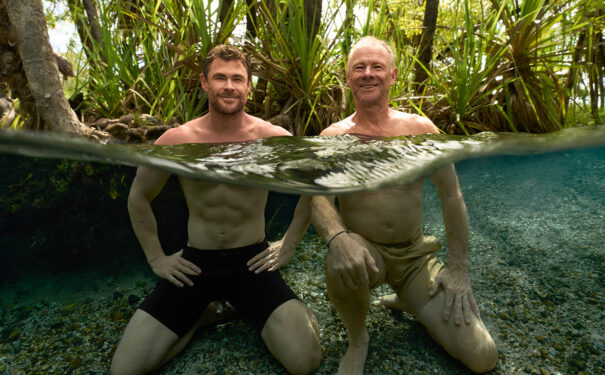
Chris Hemsworth & the dementia doctor
In the documentary ‘A Road Trip To Remember’, Chris Hemsworth and his recently dementia-diagnosed father take a road trip back through their past, while exploring social connection and reminiscence therapy using the advice…
-
National Science Week – find events near you!
Australia’s National Science Week is a nationwide celebration of science and technology. It’s held every August, this year from 9 – 17 August, bringing events for all levels of science lovers, including local,…
-
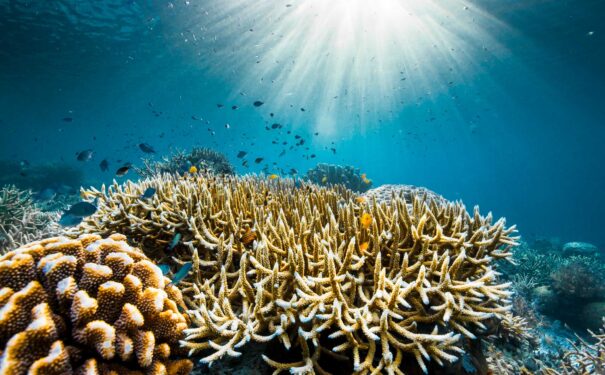
‘Ocean with David Attenborough’ – masterpiece and call to action
Wake-up call, and a call to arms The spectacular feature-length documentary ‘Ocean with David Attenborough’ is his very first partnership with National Geographic, now showing on Disney+ channel in Australia. With the great…
-
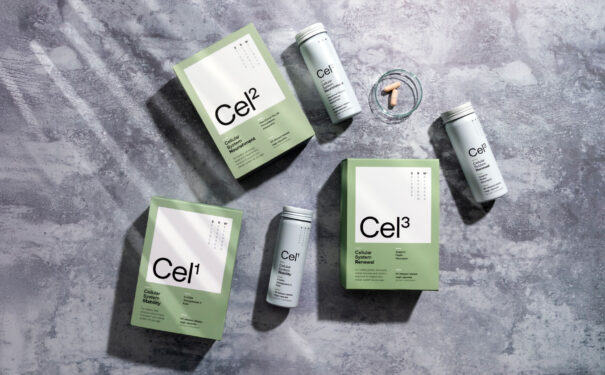
Breakthrough in Cellular Energy and Longevity Innovation
In a bold step toward redefining how we age, SRW Laboratories, New Zealand’s frontrunner in biotechnology, has unveiled its latest breakthrough: Cel2 NR. This next-generation supplement, the newest addition to the acclaimed Cel Range,…
-
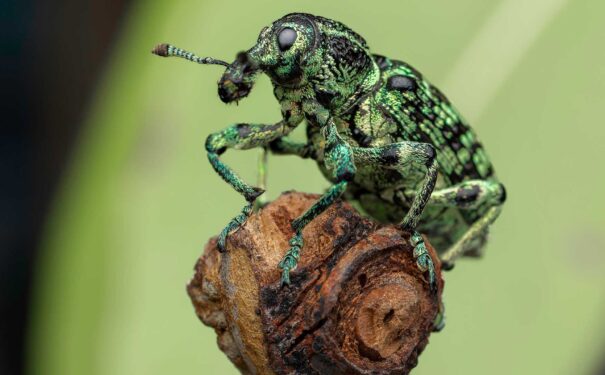
PHOTODOC: A Real Bug’s Life – in Australia
National Geographic’s series ‘A Real Bug’s Life’ returns on January 15th to Disney+ for a second season, this time including an episode dedicated to our unique Australian insect life. The production team shared…
-

Do we know how long it took the Sun to form?
While there is consensus that our Sun formed about 4.6 billion years ago from a molecular cloud of gas and dust, less has been known about how long the formation of the star…
-

A new breed of education
KAUST’s internships invite the brightest and best to join a vibrant international STEM community on the shores of the Red Sea. [This is an informational advertising feature produced in collaboration with KAUST.] King…
-

Why is the world’s largest volcano in the middle of nowhere?
Mauna Loa in Hawaii is the world’s largest active volcano, and its 2022 eruption was the volcano’s 34th since 1843. But why is such a giant volcano located in the middle of the…
-

Ancient roos bounce back
Palaeontologists from Flinders University have described three unusual new species of giant fossil kangaroo. Over the last decade, a series of discoveries around Lake Callabonna in arid South Australia have yielded multiple complete…
-

INTERVIEW: Talking telescopes with the Director of new IMAX movie ‘Deep Sky’
Deep Sky is directed by Oscar-nominated filmmaker Nathaniel Kahn: a new film which uses the scale of giant IMAX screens to take audiences on a journey to the beginning of time and space,…
-

Do kangaroos form longterm relationships?
While kangaroos are a very social species, there has until recently been no evidence that they form long-term relationships between individuals. But a new study by researchers from UNSW Sydney indicates that this…
-

WOMADelaide ‘Planet Talks’ series announced for March 2024
WOMADelaide’s ‘Planet Talks’ program is a forum that has run alongside the world music festival since 2013, holding public conversation and discussions about the environment and a sustainable future for the planet. The…
-

Who owns the Moon?
In 1967, the United Nations adopted the “Outer Space Treaty”, according to which no nation can claim sovereignty over outer space. It also stated that the Moon and other heavenly bodies are to…
-

What are food colourings made from?
Food colourings can be made from plants, animals or synthetically. As additives they are given identifying numbers, known as ‘E’ numbers in Europe; in Australia we use the same list but omit the…
-

Shared houses also share bacteria
People living together often share many things. One of them turns out to be bacteria, as one of the biggest ever studies into bacterial transfer reveals how your co-habitants can affect your health….
-

How well do elephants smell?
“Does the long trunk of an elephant give it an advantage for a sense of smell? Or is it more designed as a tool for other things?” Elephants have an acute sense of…
-

Is it dangerous to ignite your farts?
READER QUERY: “I have a friend who claims that he has set light to his farts. Can this be done, and is it dangerous?” The gases released during flatulence are indeed flammable. Gut…
-

How many species can be found in a glass of ocean water?
If you’ve ever been involved in a school experiment looking at ocean or river water under a microscope, you’ll know that even a single drop teems with life, from larvae and fish visible…
-

Can there be problems when scientists reintroduce endangered species?
There are many projects aiming to replenish or broaden the gene pool of wild animal populations that are under threat. Few are more vital to survival than efforts to save the Tasmanian devil….
-

Do other planets have solar eclipses?
Do the other Solar System planets also experience total and partial solar eclipses like the ones we witness on Earth? The answer is yes: solar eclipses frequently happen throughout the Solar System. A…
-

The Planet Talks at WOMADelaide
‘The Planet Talks’ is a three-day ecological and conversational forum taking part during WOMADelaide, the music and dance festival which features over 60 groups presented across four days and seven stages. WOMADelaide takes…
-

Can a fright really cure hiccups?
READER QUESTION: “When I get hiccups, someone almost always shouts ‘Boo!’. Is there any reason to believe that this helps?” In scientific terms speaking, there is no proof that a fright can cure…
-

Unreal nature – AI images blur boundaries
None of these beautiful images of nature is real. We created them all using an artificial intelligence ‘art engine’ called Stable Diffusion. In a matter of seconds, the art engine turns any text…
-

How the giraffe really got its neck
The question of how the giraffe got its long neck has long been debated by scientists throughout the world. Since the days of Charles Darwin, the dominant theory has been that the giraffe’s…
-

Reverse extinctions, Tasmanian tigers and smoky mice
The idea of bringing back extinct flora and fauna is not new, but the challenge is two-fold: first in sequencing a full genome from recovered DNA fragments, and then in taking stem cells…
-

Groundwater could speed the loss of Antarctic ice
Australian research has uncovered groundwater beneath the Antarctic ice which may increase glacial loss and the rising of ocean levels. Antarctica preserves Earth’s largest ice sheet, and scientists have been warning for decades…
-

It’s National Science Week!
First held in 1997, National Science Week has become one of Australia’s largest festivals. Last year — despite the pandemic — some 1.3 million people participated in more than 1750 events and activities….
-

The smell of fresh-cut grass is an attack warning
We love the smell of fresh-cut grass. But in reality what we are smelling is a warning signal being released by plants under attack. The pheromones emitted by freshly-mown grass are known as…
-

All cats are psychopaths
Most people know that cats can be unpredictable. Now, scientists have developed a test which proves that cats have psychopathic characteristics. Cats have been loved, valued and even worshipped by people for thousands…
-

Art work generated by artificial intelligence
This is a frame from a dynamic artwork by Istanbul-based artist Ferdi Alici, who has collaborated with NASA and CERN to create a huge AI-driven multisensory experience which will form part of lluminate…
-

Crocodile eats dinosaur!
Neutron imaging of delicate fossils reveals what an ancient crocodile had for dinner. The Australian Age of Dinosaurs Museum has announced the discovery of Confractosuchus sauroktonos, a new genus and species of ancient…
-

What is the world’s most toxic tree?
“I recently say a sign in Wingham Brush Nature Reserve, warning of giant stinging trees. Are there any trees more toxic than these?” The various species of Dendrocnide, such as the Dendrocnide excela…
-

New tool will help black-hole hunters re-examine old data
Astronomers have a new way of detecting active black holes and of measuring how much matter they are sucking in. Scientists say that the new technique can use existing data from telescopes to…
-

It’s Frog ID week – here’s how you can help
More than 240 frog species are under threat from climate change, bushfires, floods, habitat loss and degradation, and disease. You can help save them by taking part in the fourth annual FrogID Week, 12-21…
-

Nature Book Week – free online events from 6 September
The Wilderness Society’s Nature Book Week starts on 6 September, with science communicator Dr Jen Martin as his year’s Nature Book Week Ambassador, leading a series of workshops, talks and events – just…
-

National Science Week is over – wasn’t it great!
National Science Week 2021 ran from 14 to 24 August, with this year’s festival incorporating thousands of events around Australia on science subjects as diverse as health, sport, technology, Indigenous health, farming, food,…
-

Synchrotron – Australia’s great ring of light
Greg Le Blanc and his team are some 22km south-east of the CBD in Melbourne, working underground in the middle of the night. In an enclosed room they huddle over monitor screens, while…
-

Could we use solar power to purify drinking water?
There has been significant recent research into the possibility of desalination using photo-thermal evaporators powered only by sunlight. The problem has been achieving an efficiency high enough to make such devices practical. Scientists…
-

Australia’s new leader in botanical science
Australia has a new scientific institute that brings together an astoundingly broad sweep of botanic research organisations and collections, services and facilities. The Australian Institute of Botanical Science is positioned to become a…
-

Your vaccines are ready – how they did it in under a year
More than 180 different COVID-19 vaccines were in the initial pipeline – and the majority of them can be placed in one of four vaccine categories. One is a classic. Two are comparatively…
-

This prehistoric croc was faster on two legs, despite having flat feet
Scientists have found evidence that crocodile ancestors walked on their hind legs – like a Tyrannosaurus rex. Modern crocodiles crawl forwards with four legs all to the sides, but 120 million years ago,…
-

Aussie lungfish has largest animal genome known to science
Scientists are teasing out the secrets that place the Australian lungfish near a critical moment of evolution. A team of researchers at the Research Institute of Molecular Pathology (IMP) in Vienna has sequenced…
-

New issue out now! Quasars, anxiety, underwater killers, quantum computers and the Doomsday Glacier…
Issue #80 of Australian Science Illustrated publishes today! Learn about the cosmic storms generated by quasars, the world-changing ways of quantum computers, the promising future of wave energy, the frightening hunting methods of…
-

Superdeep diamonds reveal the limits of carbon-based life
For the first time, analyses of diamonds have demonstrated how deeply life leaves its mark inside the Earth. All life on Earth is part of the carbon cycle. Plants and animals are made…
-

Look to the skies: rare chance to see candidate for Star of Bethlehem?
Right on the solstice, a ‘great conjunction’ of Jupiter and Saturn will occur when the two planets converge shortly after sunset Australia time tonight, Monday 21 December. They will appear almost as one…
-

Aussie Anne Abbott wins John Maddox Prize for ‘Standing up for Science’
While the main John Maddox Prize for 2020 goes to Anthony Fauci and Salim Abdool Karim for their communication of evidence during the Covid-19 pandemic, the judges have again this year chosen to…
-

Is Rudolph’s nose really red?
Reindeer do have red noses, due to a high concentration of red blood cells. The four-legged animals have at least 25% more blood cells in their noses than humans. While this may have…
-

Lorikeets rule as 4.6 million birds are counted in 7 days
The 2020 Aussie Backyard Bird Count achieves a record response for citizen-based science. Unprecedented numbers of people across Australia took part in BirdLife Australia’s popular 2020 Aussie Backyard Bird Count, which ran from…
-

Teaching humans to hibernate
The idea of making astronauts hibernate on long space missions often appears in science fiction, but now it is one step closer to reality. Scientists from the University of Tsukuba in Japan have…
-

Why do Christmas Island crabs swarm every year?
Once a year on Christmas Island, in the Indian Ocean, some 120 million terrestrial crabs migrate from the jungle to the water to breed. The crabs swarm during the rainy season, which takes…
-

Solar panels that sweat…
Engineers across the world are searching for way to improve the efficiency of solar panels. As new materials and designs are tested, any efficiency improvement – even a few percent – is announced…
-

Martian colonists could live in ancient volcanic lava tunnels
Scientists have discovered the safest place to build a permanent base on Mars: lava tunnels created by volcanoes that are now extinct. Unlike Earth, Mars does not have a magnetic field that protects…
-

A one-way ticket to Keplar-20b
Could we ever get home from a super-Earth? It’s hard enough for huge rockets to provide the energy required to launch into orbit from Earth. But what if the field of gravity was…
-

UNSW Sydney launches virtual Museum of Human Disease
Staff at the Museum of Human Disease at UNSW Sydney have used their lockdown time wisely, by creating a virtual version of their collection of real organs and body parts, which constitute the…
-

Giant Camarasaurus dinosaurs had beaks
Scientists from the University of Bonn in Germany have solved a mystery that has bothered palaeontologists for years. Discoveries have been made in many places around the world of dinosaur teeth preserved in…
-

‘Crazy beast’ from the age of dinosaurs discovered
A new mammal from an essentially unknown group found only in the Southern Hemisphere has been revealed by international research involving palaeontologists from Monash University. The full fossil skeleton allows a reconstruction of…
-

Think Inc. moves online with Outside The Box: Jamie Metzl 26 April
Previous Think Inc. events have brought leading science minds such as Jane Goodall, Neil deGrasse Tyson, and Richard Dawkins in tour to Australia, speaking in a town hall or auditorium setting in a…
-

Auto-brewery gut bacteria get you drunk
A special type of a well-known intestinal bacterium could be responsible for some cases of severe liver disease, according to new studies. Scientists from the Capital Institute of Pediatrics in China discovered the…
-

Mysterious old dwarf found in the Philippines
Scientists from the Australian National University have discovered bones and teeth that could add a new chapter to human history. Although the finds from the Callao cave in the Philippines are scarce, there…
-

2019 ANZ SCOPUS Research Awards – Applications open until Oct 31
The Scopus Researcher Awards recognise outstanding researchers in Australia and New Zealand who have made significant contributions to their fields and areas of research. The winner for each category receives $1000 cash prize,…
-

Japanese scientists revive mammoth cells (and other mammoth news)
Japanese scientists have extracted cell nuclei from the bone marrow of a 28,000-year-old mammoth and inserted them into mouse egg cells. Subsequently, they observed that the cell nuclei showed signs of division, but…
-

Compressed air: sonic shock waves collide
When a plane flies faster than the speed of sound, the pressure waves in front don’t have time to flow around the aircraft and the air becomes compressed, eventually producing a shock wave,…
-

Our ancestors hunted a Siberian unicorn
A prehistoric rhinoceros nicknamed the Siberian unicorn roamed the tundra when modern man arrived in the region, according to new research. The rhino with the Latin name of Elasmotherium sibiricum weighed more than…
-

What is beach ‘foam’?
Beach foam is produced from proteins. The white beach foam is due to fat and protein in ocean water, which the surf ‘whips’, just like whipped cream. Animals and plants in both salty…
-

Two human species shared the same cave
The two human species to which we are most closely related lived close to each other for thousands of years. This has been established by archaeologists from the University of Wollongong in NSW,…
-

Artificial tongue to lick fake whisky
Who else but Scottish engineers would think of using an artificial tongue to differentiate between whiskies? A new paper published in the Royal Society of Chemistry’s journal Nanoscale describe how they built the tiny…
-

World’s heaviest organism living underground in the US
One of the world’s oldest and biggest inhabitants – a honey fungus – has spread tremendously. Scientists from the University of Missouri in the US have studied a famous honey fungus, Armillaria gallica,…
-

Why doesn’t a dishwasher dry plastic?
After a dishwasher cycle, the plates and glasses are usually dry, whereas plastic boxes and cups remain wet. The difference is due to the different materials’ ability to absorb heat, also known as…
-

Moon landing celebrated by new ISS arrivals
ESA, NAS and Russion astronauts were launched to the International Space Station from the Baikonur cosmodrome in Kazakhstan on Saturday, with the ESA’s Luca Parmitano alongside NASA astronaut Drew Morgan and Russian Roscosmos…
-

The Sahara will be fertile in 10,000 years
Fossils in the bone-dry Sahara Desert reveal that the sand dunes are located in what was previously a moist, fertile region. Scientists used to believe that the Sahara switched between dry and moist…
-

2050: THE YEAR OF INSTANT OIL
Another holiday in the near future. Your family is on a road trip, and after several hours, it’s time to fill up. Oil and coal are in short supply, and foreign superpowers are…
-

Big Bang: The Accidental Proof
Something like 50 years ago, two astronomers made a discovery by accident, which became central to the current leading theory of the creation of the universe – and the theory which the most…
-

Vintage Science – Big Dig In Panama
At was nearly two o’clock in the afternoon, the people gathered on the shore of the Gatun Lake became more and more excited. Everybody was looking at the dam, that seperated the…
-

The Mahogany Ship
Was Australia discovered by the Portuguese in the 15th Century?
-

Ancient Wonders
Have you wondered who would win in a fight between a crocodile and a shark? Don’t kid yourself: this thought has crossed your mind before, right? My money is on the croc. Crocodiles,…
-

History in the Blood
Molecular detectives find soft, biological material in hard, fossilised bones of animals and humans. The material bears witness to everything from hominin skin colour and dinosaurs’ kinship with birds to the Incan…
-

A 3D-PRINTED SECOND CHANCE
Baby Kaiba seemed healthy, but when he was six weeks old, his parents were shocked to the core. The family was dining at a restaurant, when the little boy suddenly stopped breathing, and…
-

2014: a space odyssey
Brad Pitt is, Michael Schumacher is, and Stephen Hawking is too. They are waiting. They are excited. Some 580 well-known and unknown people have lined up for the adventure of their lives. They…
-

The Perfect Killer
Lions and white sharks are top-level predators, but compared to the superior hunter of the world of insects, they’re rank amateurs. Nature has made the dragonfly an efficient killing machine, whose sophisticated vision,…
-

Scientists are reviving extinct species:
Return of the beasts One single cell. That could be all we need to revive a mammoth. Over the last decade, scientists have been part of a veritable revolution of DNA decoding and…
-

Top 10 Science Myths
“The Great Wall of China is visible from space” The 2,200-year-old Chinese structure is impressive. But it cannot be observed from space – and certainly not from the Moon. Unless you have super-vision….
-

Molecular Murder
Nature’s most potent poisons attack the tiniest building blocks of our bodies: the cells. Poisons can effect as little as one molecule – but this has fatal consequences. Even the slightest molecular change…
-

Super Telescopes
SOLVING THE MYSTERIES OF THE UNIVERSE In the most desolate regions of the globe, astronomers and engineers are building a new generation of super telescopes. The high-tech structures will be spread across several…
-

See-through soil will improve crops
The mysterious world of the rhizosphere revealed.
-
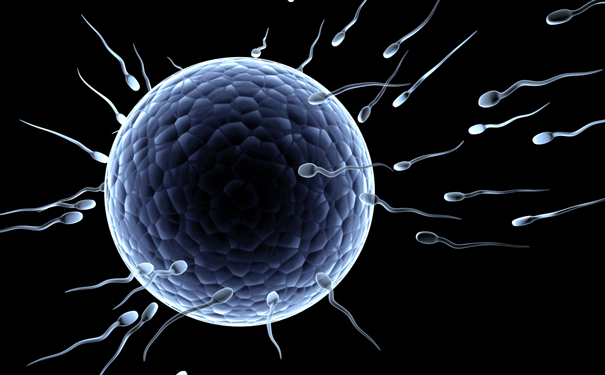
Protein could give IVF couples hope
One protein is critical for the beginning of life.
-

Armour-covered floating beauty
‘Ehux’ is a micro-organism vital to marine food chains — it is also visually mesmerising.
-

Bioengineers developed an artificial jellyfish
Medusoid is the brainchild of professor Kevin Kit Parker and a team of researchers at the California Institute of Technology and Harvard University. Using silicone and muscle cells taken from a rat’s heart,…
Top science jobs: Rainforest crusader
For William Laurance, no two days are ever the same. One might involve supervising a PhD project in Asia, the next he could be deep in the North Queensland rainforest, collecting evidence of…

Do-it-yourself science projects: Storm clouds in a bottle
To print this project, click on the image and select print in your file menu. Related links: Make a pinhole camera Make a volcano Make a periscope Make your own mini desalination plant
Unicorn flies discovered in amber
A hundred million years ago, flies with horns on the top of their heads were buzzing around modern-day Myanmar (formerly Burma).
Toucan’s giant beak explained
The toucan’s large beak makes up about a third of the bird’s body length and as much as 40 per cent of the bird’s total surface area.
Science Illustrated Nov/Dec issue on sale November 17
Wind power: It’s plentiful, accessible and gentle on the environment, but challenges still remain for this renewable energy source. We take a look at this growing industry and where it might go in…
Backyard bugs: Meet the Blue Banded Bee
For a long time people thought that blue banded bees were only attracted to blue and purple flowers. While it is true that they have a particular fondness for blue things (and not…
Ask Us: What gives bird feathers their colours?
Birds can see a larger spectrum of colours than most of us, and they flaunt a variety of eye-catching plumage. Pigments called melanins, carotenoids and porphyrins made in the bird’s skin produce most…
Maggot factory offers hope against flesh-eating parasites
A factory in the southeastern Mexican city of Tuxtla Gutierrez is hard at work churning out an unusual product: bugs.

