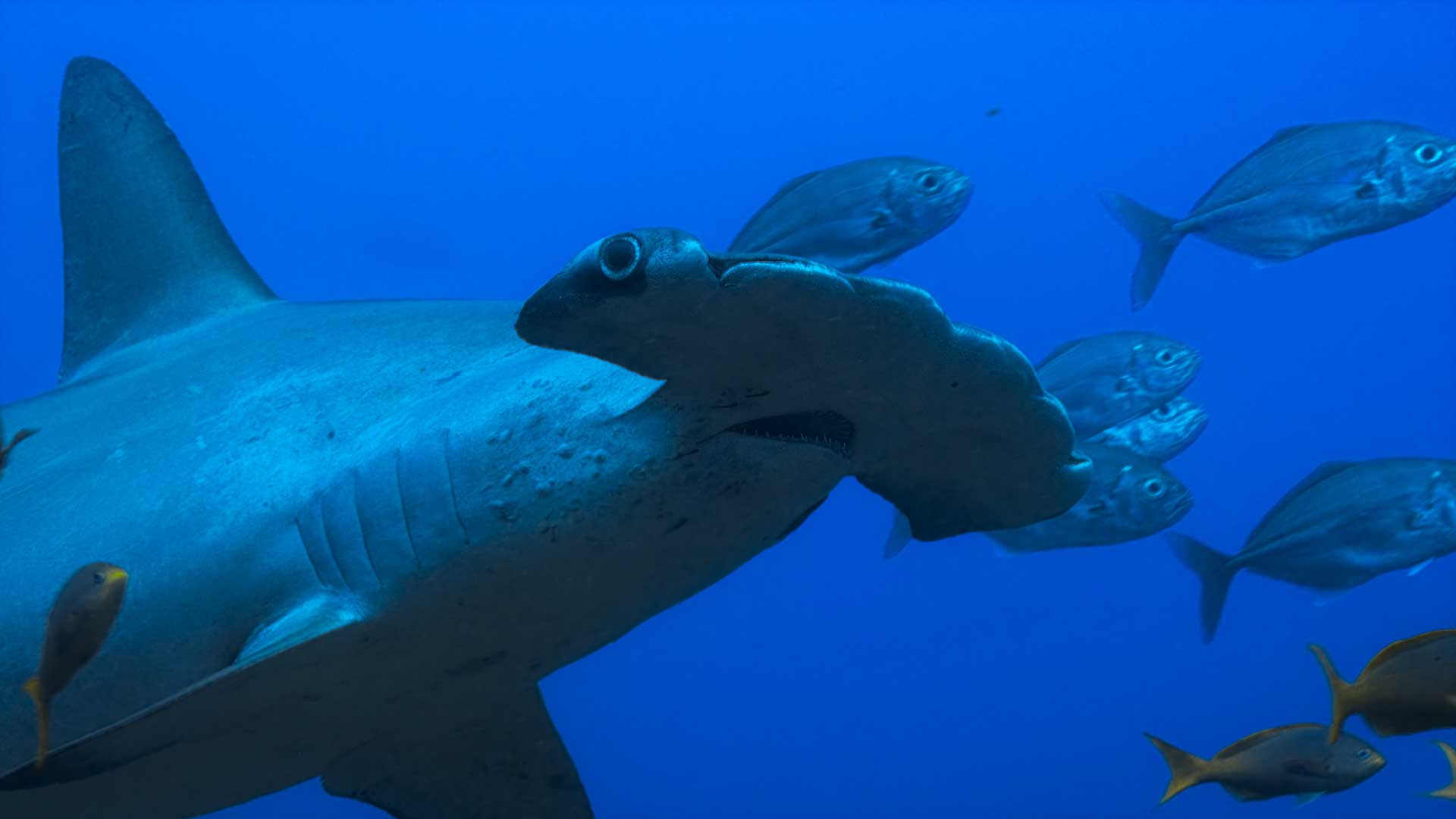
A scalloped hammerhead shark, a critically endangered species, swims safely in the protected waters of a national park. (Image: National Geographic)
Annual SharkFest gets up close with hammerheads
Shark fans are warming up for their annual ‘SharkFest’ courtesy of National Geographic, now in its 14th year, and kicking off on July 5 with the launching of Hammerhead Sharks Up Close With Bertie Gregory.
The new show follows up last year’s special-event documentary when Gregory went in search of a variety of sharks: this year the Emmy- and BAFTA-winning cinematographer and National Geographic Explorer is focusing in one a particular species, getting up close and personal specifically with the visually iconic hammerhead shark.
He dives in the Pacific waters around Mexico, where hammerheads were once abundant. But hammerhead populations have plummeted, making sightings increasingly rare. In the new show Bertie Gregory joins with shark scientists and local experts to investigate what’s driving the hammerhead decline, and whether protected waters offer hope for the future.
“We humans have pushed hammerheads to the brink of extinction,” says Gregory; “but we might have a chance to make amends.”
Shark fisherman, Javier Snr, whose local expertise contributes to Dr James Ketchum’s conservation research, tracking the movements of hammerhead sharks. Dr. Ketchum is a prominent marine biologist and conservationist who focuses on the ecology, behaviour,and spatial movements of migratory pelagic species, most notably sharks. He is the Director of Marine Conservation and co-founder of Pelagios Kakunjá, a non-profit organization based in Mexico dedicated to researching and protecting marine megafauna. (credit: National Geographic/Will West)
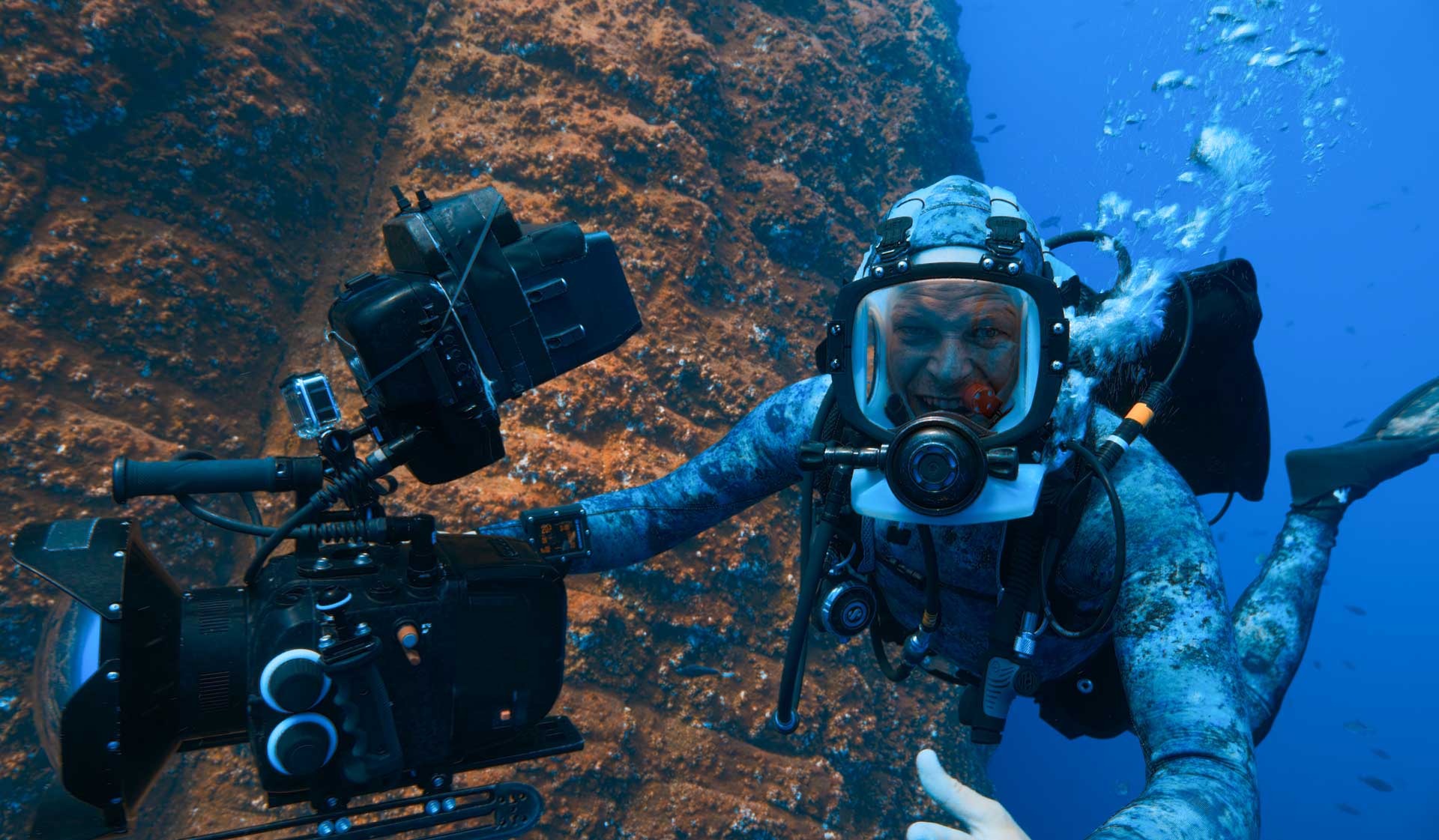
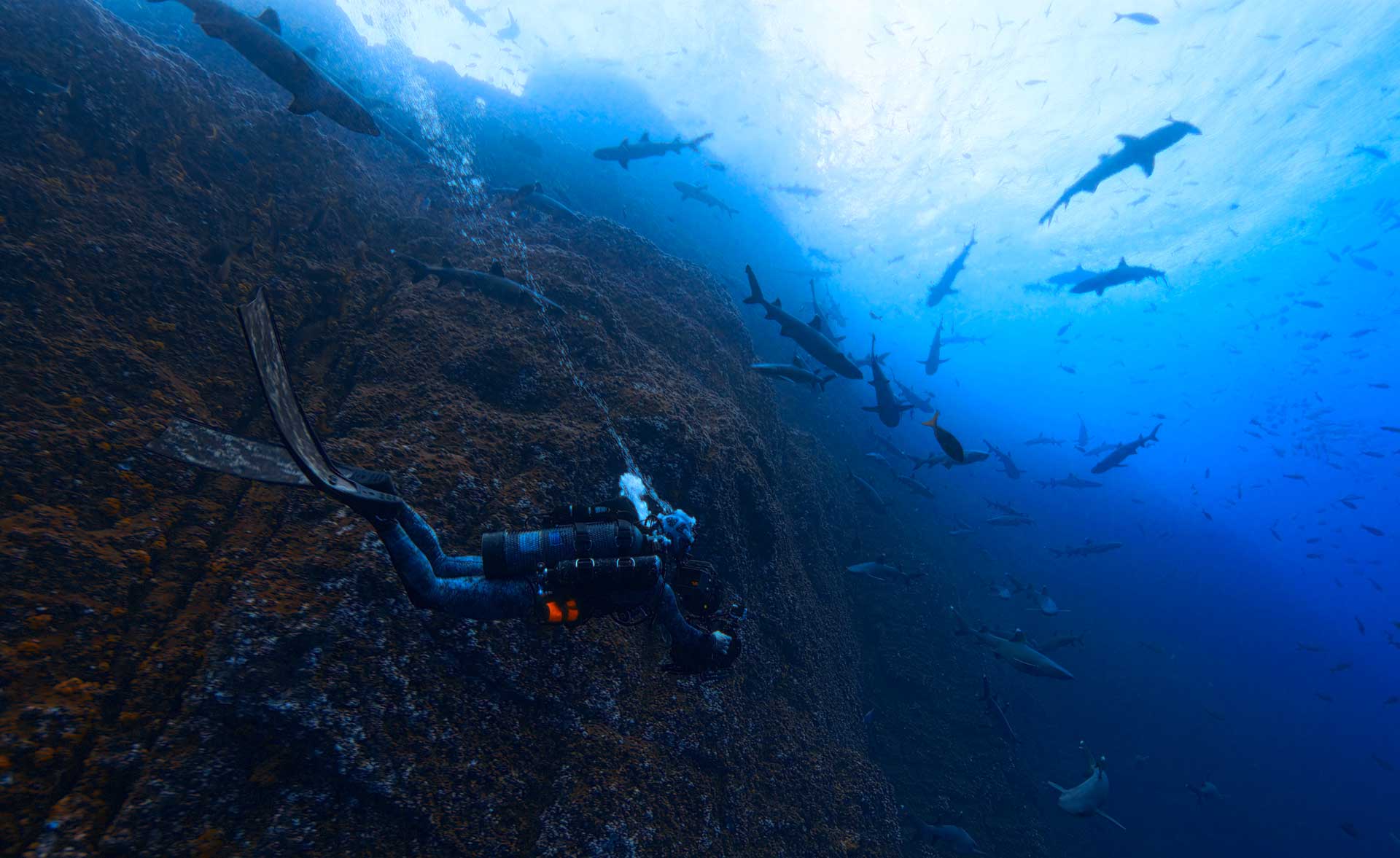
Programme host Bertie Gregory dives at Revillagigedo Islands. Gregory is a prominent British wildlife filmmaker, photographer, and television presenter renowned for his immersive, high-stakes documentary work. A National Geographic Explorer and a decorated cinematographer, he was also named the 2025 National Geographic Rolex Explorer of the Year, (credit: National Geographic/Jeff Hester)
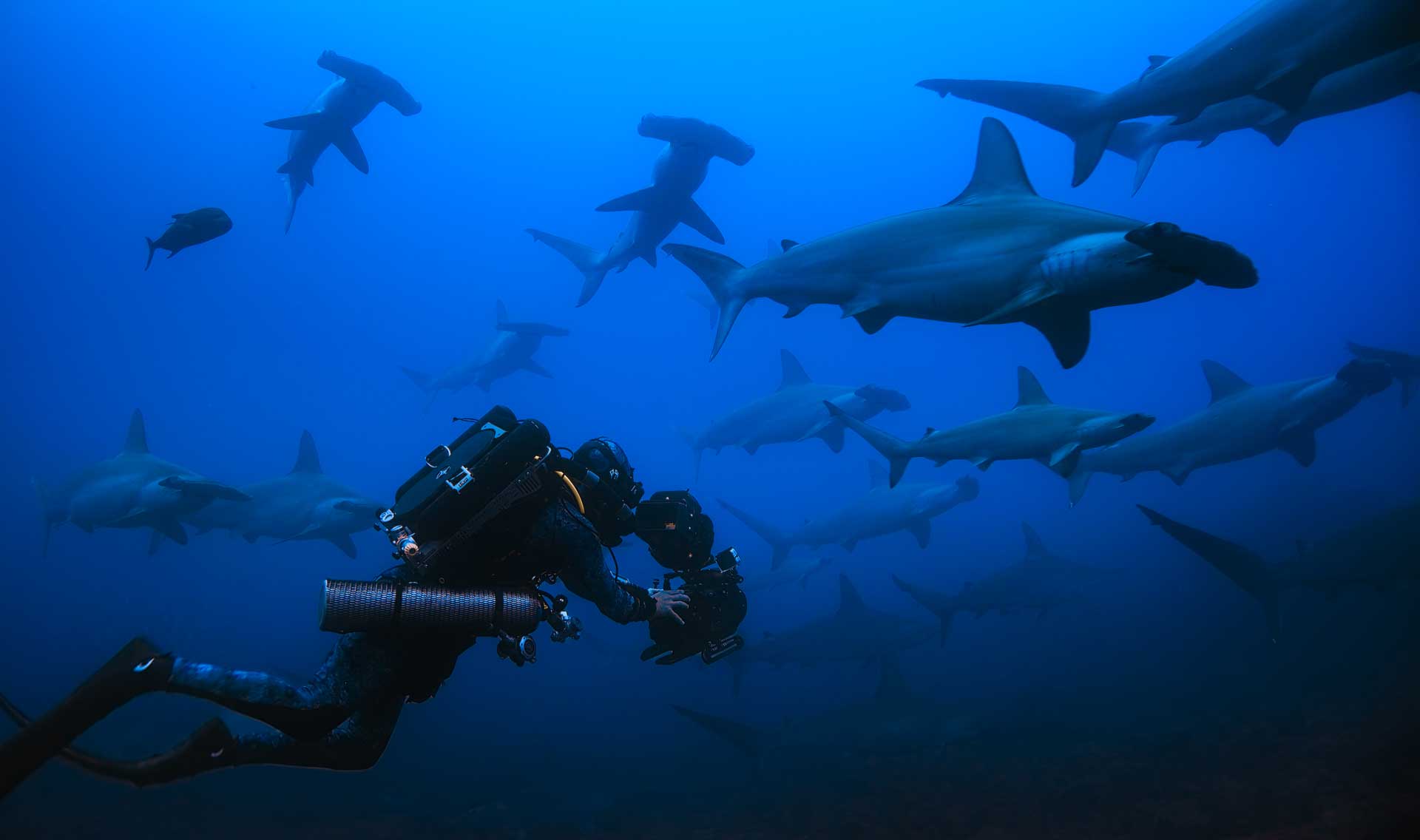
Bertie Gregory dives with several hammerhead sharks. Their uniquely flattened, lateral-extended heads, known as cephalofoils, are highly evolved sensory tools that provide these sharks with significant predatory advantages, including a 360-degree field of vision in the vertical plane, while the wide surface area hosts specialised electroreceptors that detect the faint electrical signals of prey (like stingrays) hiding beneath the sand. (credit: National Geographic/Jeff Hester)
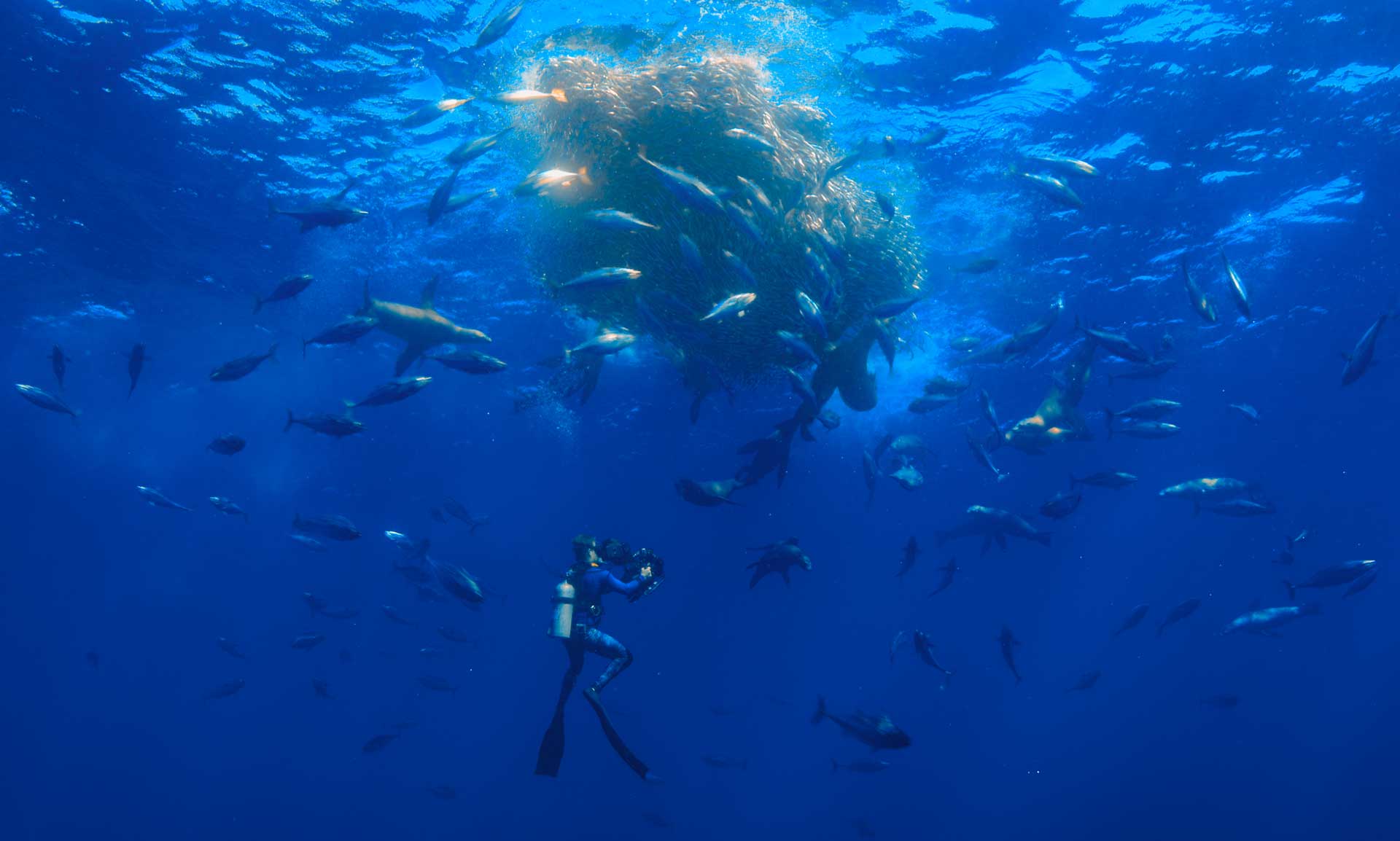
Bertie Gregory dives with a bait ball. Diving with a bait ball is a high-stakes adrenaline-fuelled experience: for underwater photography and marine research it offers unparalleled access to apex predators in their natural environment, not to mention the ultimate ‘action’ shot for the documentary. but is also potentially dangerous situation, creating an active hunting ground in which the divers are inserted. (credit: National Geographic/Jeff Hester)
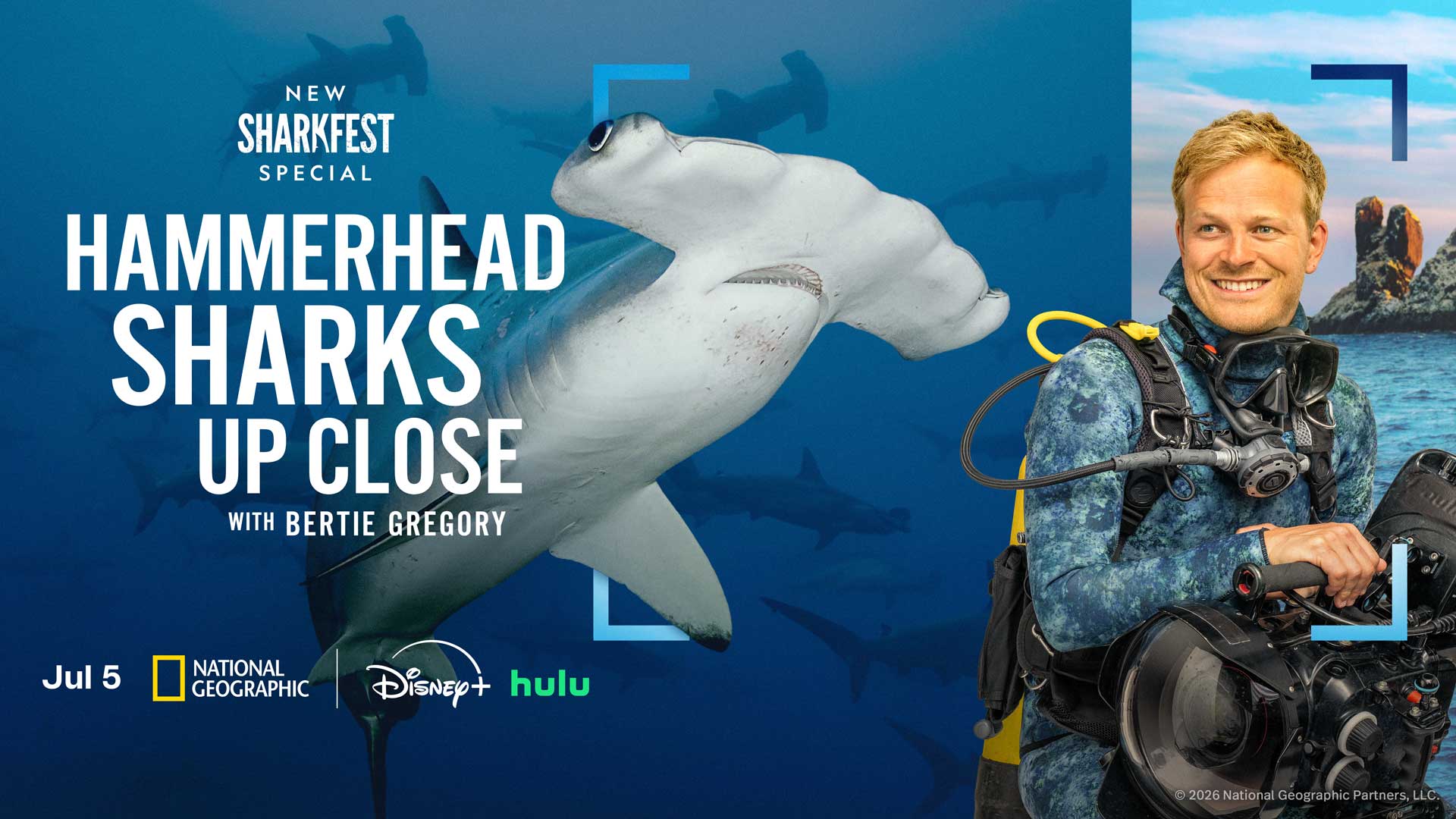
SharkFest programming will stream from July 5 on Disney+ and Hulu.