(c) AIMS / Iris Lai
MARINE BIOLOGY
Sea cucumbers play an important role in tropical marine ecosystems, recycling nutrients on the ocean floor and mixing sediment. Healthy populations can enhance coral health.
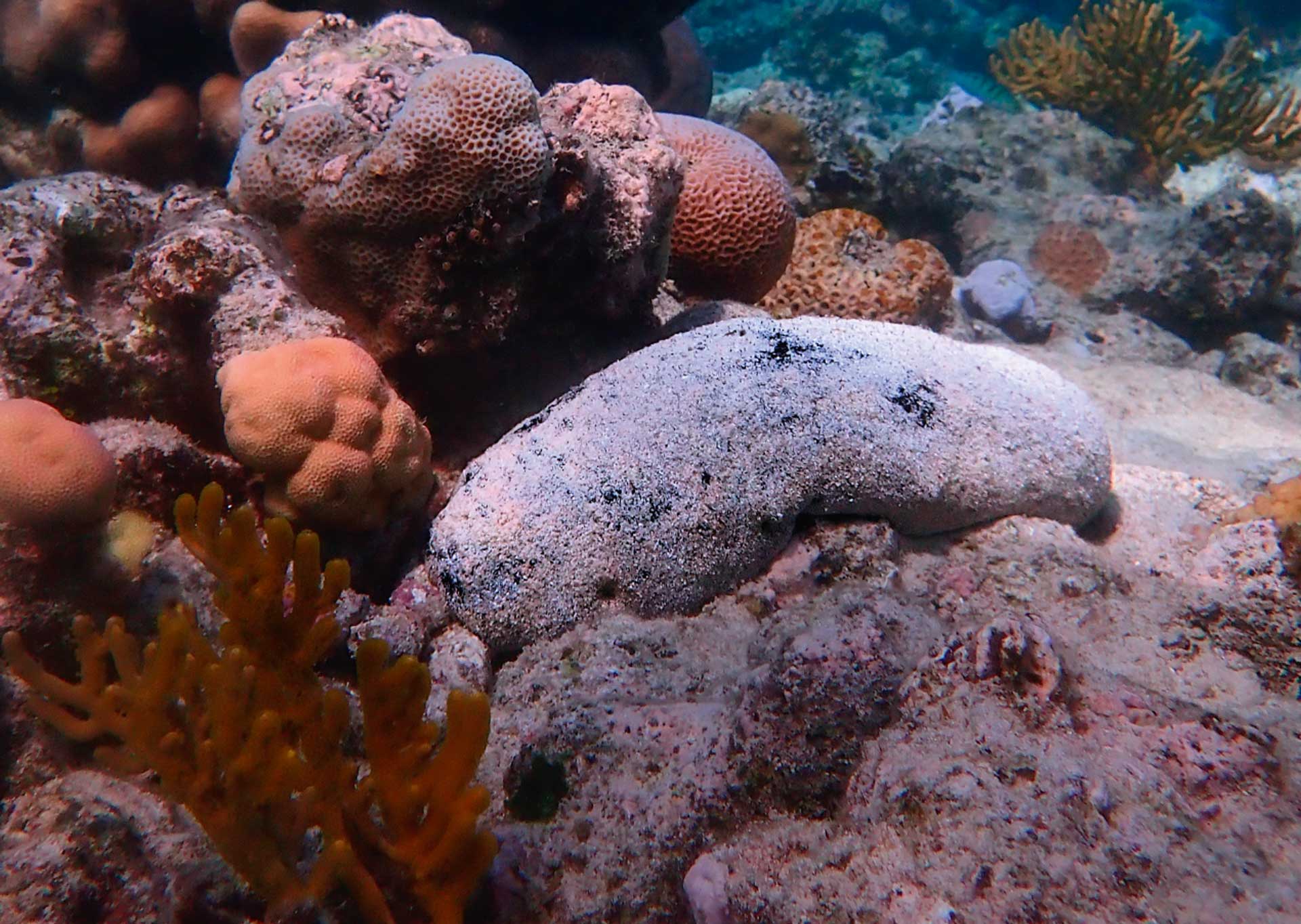
A collaborative study between the Australian Institute of Marine Science, the University of Sydney and Southern Cross University recently collected DNA samples from a population of black teatfish sea cucumbers in a ‘no-take’ zone of the Great Barrier Reef Marine Park.
These were compared with samples collected from the same location 24 years later, and researchers were amazed to find that 60% of them were the same individuals, still alive.
“We had a hunch that they could get older than the 10 years that was commonly thought,” says AIMS Senior Principal Research Scientist Dr Sven Uthicke. “We found they live for 24 to 27 years on average, while some live for more than 100 years. It shows adult black teatfish have extreme longevity and very low natural death rates.”
This also suggests that black teatfish populations will recover much more slowly from fishing pressure than previously assumed.
Black teatfish is a valued delicacy in some cultures; it is fished in Australia, the Pacific Islands and Southeast Asia. It can sell for more than A$400 per kilogram in Hong Kong,
“Harvesting needs to be a lot more conservative,” warns Dr Uthike, saying that current fisheries management approaches need to be re-evaluated, as these assume tropical sea cucumbers can replace harvested individuals faster than the new research results indicate.
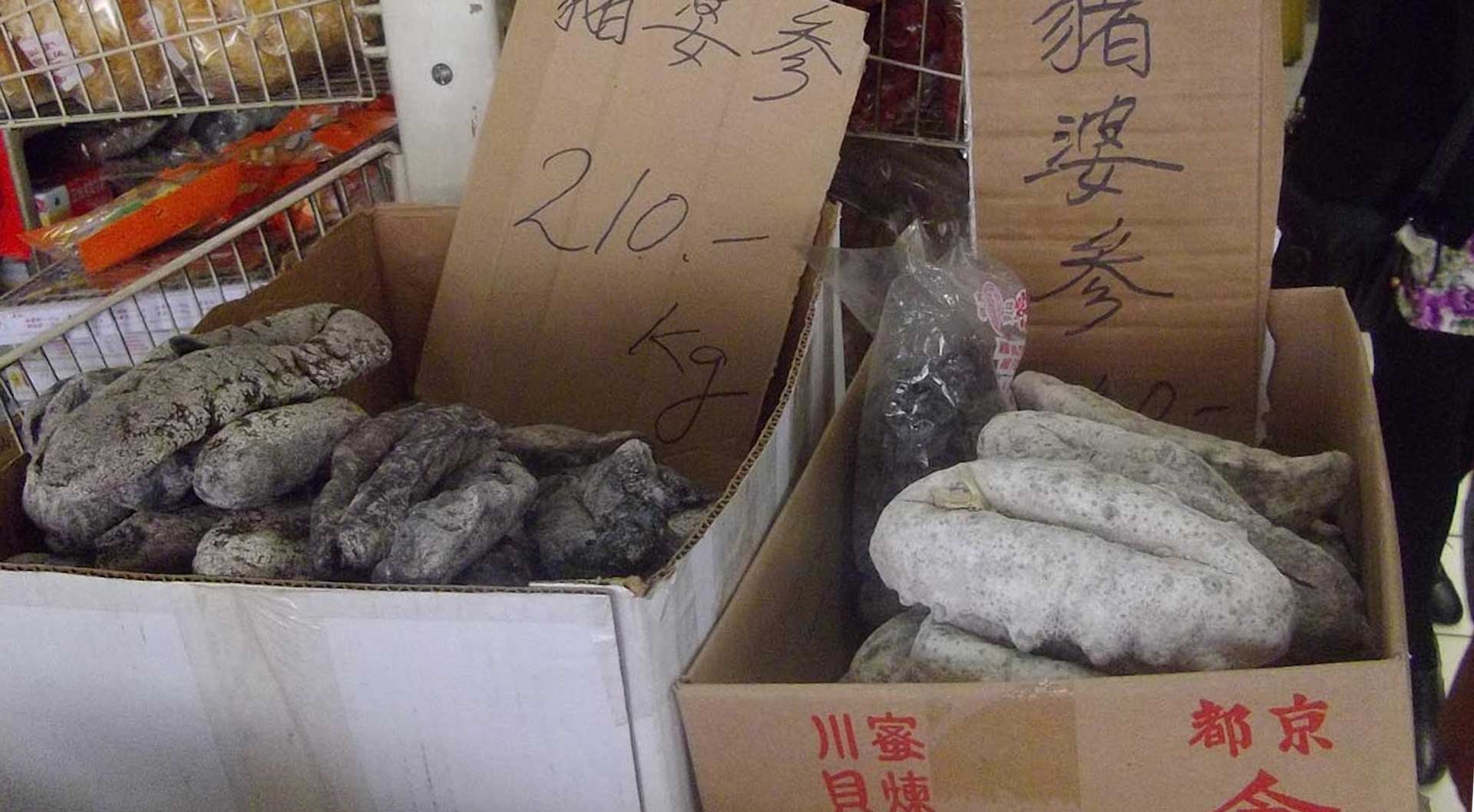
Delicacies in danger: longer lifespans of sea cucumbers indicate they are being overfished.
(c) AIMS/CHANTAL CONAND
Extreme longevity revealed by 24-year genetic mark-recapture challenges conservation of endangered sea cucumbers’, was published in iScience